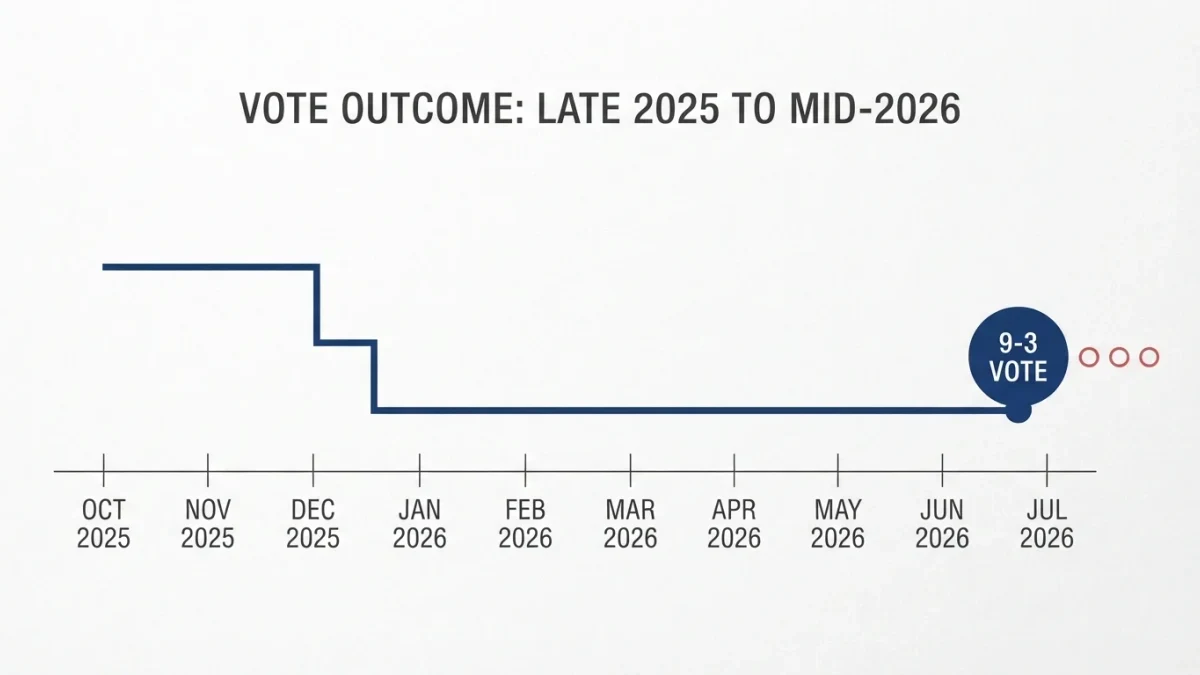
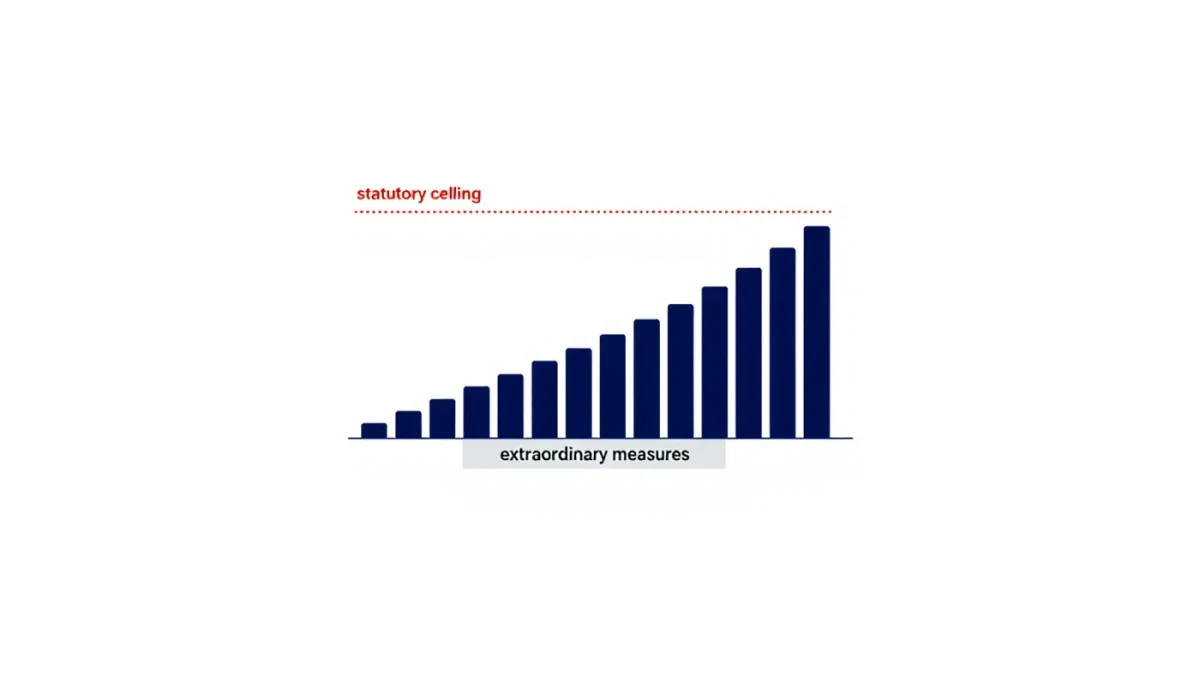
The debt ceiling is a legal cap on the total amount the US Treasury may borrow — and because it limits borrowing for spending Congress has already authorized, it functions as a limit on paying bills rather than a limit on making them. When outstanding debt hits the cap, the Treasury cannot issue new bonds beyond it and shifts to extraordinary measures — accounting maneuvers that shuffle retirement-fund investments and other internal accounts — to keep paying obligations while Congress argues. Those measures buy months, not years; when they exhaust, the government faces the choice between missing payments and missing them differently.
SAMCASH publishes information, not political or financial advice — the mechanics below describe the machine, not the merits of any side's position.
Why does a limit on debt exist at all?
Historical accident turned into institution. Before 1917, Congress approved each bond issuance separately; the Second Liberty Bond Act consolidated approval into one aggregate ceiling to smooth World War I borrowing. The modern ritual dates to the 2011 standoff, when Standard & Poor's cut the US credit rating — the ceiling had become a lever for extracting concessions, and every standoff since has repeated the pattern: approaches to the X-date (when extraordinary measures and cash run out), market anxiety, a late deal, and repeated short-term patches that schedule the next cliff months later.
What would actually happen at the X-date?
Nobody knows precisely, because it has never happened — and the uncertainty is the finding. The Treasury would have to prioritize among obligations with incoming cash: bond interest, Social Security, military pay, Medicare providers, contractor invoices. Treasury officials have long said operational prioritization is not plannable; bond analysts warn even a brief technical default on Treasuries would ripple through the entire financial system, since Treasury yields price the world's risk-free asset and collateralize everything from money market funds to derivative margin. A missed Treasury payment is not a shutdown — furloughed workers eventually get paid — it is the reference rate of global finance discovering it can misfire.
Related stories: What Treasury yields tell you about the economy · What a strong dollar means for your wallet.
How do standoffs reach your money?
| Holding or concern | Typical standoff effect |
|---|---|
| Treasury bills near the X-date | Yields rise as buyers dodge the cliff's exact days |
| Stocks | Volatility rises into each deadline; relief rallies follow deals |
| Social Security and paychecks | Payment timing risk only at the extreme edge of a breach |
| Money market funds | Managers steer away from maturity dates near the X-date |
| Mortgage rates | Mostly indirect — via Treasury-yield turbulence |
Through the 2023 and 2025 episodes, markets wobbled, short-dated bill yields bulged around the X-date, and deals landed — which is both the reassurance and the complacency trap.
What should a household actually do?
Mostly nothing dramatic, with two calendar-aware exceptions. Do not schedule large, time-critical payments — a house closing, a tuition wire — to land in the exact week of a predicted X-date, since even operational hiccups can delay confirmations. And treat standoff-driven dips in stocks as noise unless they become a real breach, which historically recovers as deals land; selling the dip converts political theater into permanent loss. The rest of the playbook is the same boring resilience the shutdown chapter preaches: an emergency fund and no forced selling.
Do other countries do this?
Almost none — Denmark is the usual comparison, with a ceiling set so high it never binds. Most legislatures control debt at the moment spending is approved, which is the American critics' point: the ceiling votes on the borrowing for decisions already made, by a Congress that made them. Proposals to abolish it recur after every standoff, as do workarounds — the platinum coin, premium bonds, constitutional arguments under the Fourteenth Amendment — and none has been tested, which is exactly why brinkmanship retains its power to unsettle.
FAQ
Is hitting the ceiling the same as a shutdown?
No — a shutdown is a lapse of new spending authority; the ceiling binds payment of obligations already incurred. The two can even occur independently: payments continued through shutdowns precisely because they were already owed.
Has the US ever defaulted?
Not on Treasury bonds in the modern era. The 1979 delay episode — a technical processing failure that missed payments on some bills during a ceiling standoff — is the closest brush, and it briefly raised borrowing costs; a deliberate breach would be larger by orders of magnitude.
What are extraordinary measures exactly?
Accounting suspensions — halting investments and redeeming early in government retirement funds and similar accounts — that free borrowing room under existing law. They are legal, routine at every ceiling approach, and get unwound after the deal.