
Saving
How to save for a house down payment
Target the down payment plus closing costs plus reserves, park it in insured accounts on your timeline, and automate the monthly math — stocks do not belong in…
Saving addresses cash reserves: the size an emergency fund needs to reach, which accounts pay competitive rates without locking money away, and how to fund a dated goal. Sinking funds for predictable irregular costs are covered. Written for readers building a buffer while still meeting monthly obligations.
How much cash to hold, where it earns most without a lockup, and how to reach a target on a schedule that does not assume an unrealistic surplus.
Target the down payment plus closing costs plus reserves, park it in insured accounts on your timeline, and automate the monthly math — stocks do not belong in…
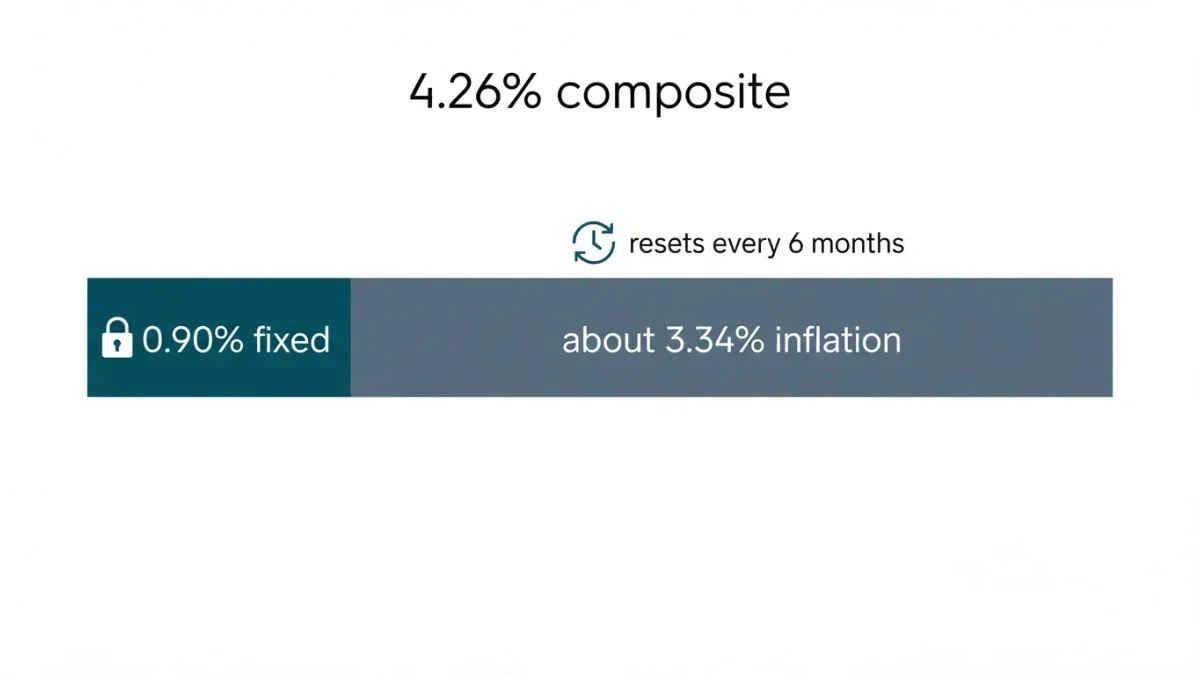
Series I savings bonds bought through October earn a 4.26% composite rate — a 0.90% fixed rate that lasts 30 years plus an inflation component of about 3.34%.

The emergency fund's job is availability, not growth — which rules out stocks, argues for high-yield savings, and makes a second bucket for slow-motion…

Split cash across certificates with staggered maturities and a piece of your money comes due every year — liquidity from the short end, yield from the long end.

A certificate of deposit pays a fixed rate for a fixed term, with FDIC insurance up to $250,000 — the trade is a penalty for cashing in early.